
With Sereneland grabbing becoming quite a nuisance , especially in Karachi, for many overseas Pakistanis, the idea of property investment in Pakistan is daunting, and paperwork often feels like a barrier. Legal requirements, verification processes, and compliance checks can be overwhelming, especially when handled remotely. This blog is designed to simplify that journey by showing exactly which documents you need and how to use them to protect your investment.
At One Homes, we understand these pain points because we are diaspora-led ourselves. We’ve built our developments and processes around transparency and trust, ensuring that buying property in Pakistan from abroad is not only possible but secure. By breaking down the documentation step by step, this blog aims to give overseas investors confidence that not only can they easily invest in a luxury home in Pakistan, but also that their purchase is protected from fraud and aligned with international standards.
Why Documentation Matters in Property Investment
Documentation is an essential part of secure property ownership. Without proper paperwork, investors risk disputes, delays, or even losing their investment. Verified documents ensure legal compliance, protect ownership rights, and provide clarity in transactions. For overseas Pakistanis, documentation is not just a formality; it’s the safeguard that makes buying property in Pakistan a reliable and trustworthy process.
Essential Documents Overseas Pakistanis Need Before Buying Property
Having the right documents in place is critical to avoid costly mistakes. Each plays a unique role in verifying identity, ownership, and financial compliance.
Valid CNIC/NICOP or Passport
A valid CNIC or NICOP is mandatory for overseas Pakistanis. It establishes identity and eligibility to purchase property. Passports may also be required for cross-border verification.
Proof of Overseas Income or Bank Details
Banks and developers require proof of remittance, income statements, or bank details to confirm that funds are legitimate. This ensures compliance with financial regulations and supports overseas Pakistani property investment.

Power of Attorney (if applicable)
If you cannot be physically present, a Special Power of Attorney allows a trusted representative or law firm to act on your behalf. A Pakistani embassy or consulate must attest to it for it to stand as a legitimate legal document.
Property Purchase Agreement
The purchase agreement outlines terms, payment schedules, and rights. For overseas buyers, clauses such as acceptance of digital signatures and milestone-linked payments are essential safeguards.
Property Documents Every Buyer Must Verify
Before finalising a purchase, overseas investors must verify the following:
-
Title deed confirming ownership history.
-
No-objection certificates (NOCs) from authorities.
-
Approved layout plans from LDA/RDA.
-
Encumbrance certificate showing no liens or disputes.
-
Seller’s CNIC and authority to sell.
-
Tax clearance certificates.
-
Mutation records for transfer of ownership
How to Verify a Property Project in Pakistan
Verification involves advisors checking project approvals from authorities such as the LDA or RDA and can include title searches and zoning reviews. Engaging legal and real estate developers or trusted developers like One Homes simplifies this process and provides added assurance.
For overseas Pakistanis, engaging a professional law firm or using diaspora-focused developers like One Homes provides added assurance. Our inspector-linked payment plans and open-door construction culture mean that every stage of the process is transparent and verifiable by clients, their friends, or relatives already in the country.
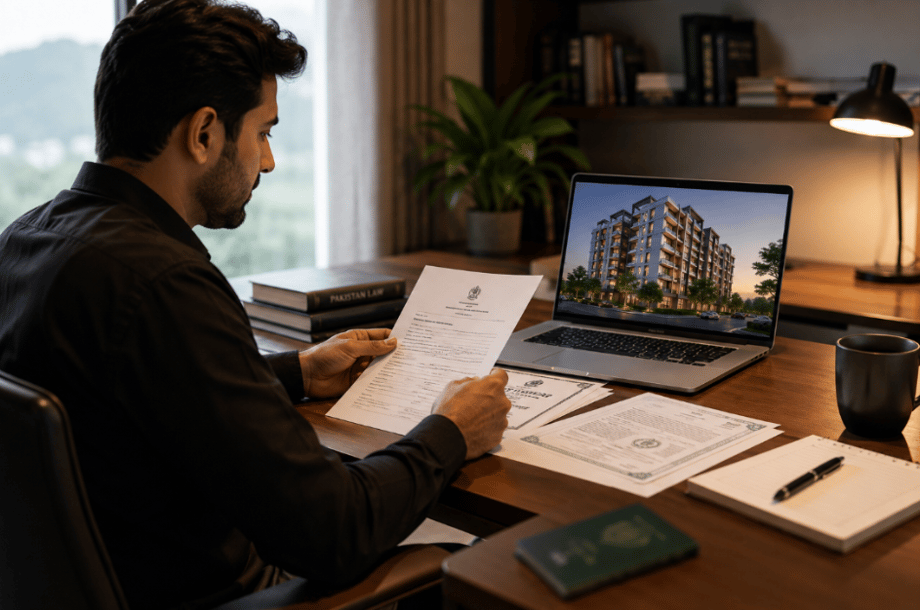
Common Documentation Mistakes Overseas Buyers Make
Documentation errors can lead to serious disputes or financial loss and should not be taken lightly.
Common mistakes include:
-
Relying on unverified sellers.
-
Ignoring title deed history.
-
Overlooking NOCs or approvals.
-
Using informal remittance channels.
-
Failing to register the Power of Attorney correctly.
-
Rental yield and management services
-
Not verifying tax clearance.
- Signing incomplete or vague contracts.
Tips to Buy Property Safely From Abroad
To ensure a safe investment when buying property in Pakistan, investors, both local and overseas, should follow the tips outlined below.
-
Always use formal banking channels.
-
Verify all legal documents with a law firm.
-
Ensure contracts include overseas buyer clauses.
-
Use NICOP for identity verification.
-
Request digital copies of approvals and NOCs.
-
Always confirm the seller’s authority to sell through official documentation or legal verification, as this step is crucial for preventing fraud and ensuring a legitimate transaction.
-
Opt for developers offering property management services.
-
Check mutation records post-purchase.
- Explore tax exemption for overseas Pakistan, where applicable.
- Choose diaspora-focused developers like One Homes for added trust.

Secure Property Investment Starts With Proper Documentation
For overseas Pakistanis, documentation is the difference between risk and security. By ensuring every paper is verified, from CNIC to purchase agreements, investors can protect their capital and enjoy peace of mind. At One Homes, we make this process seamless, combining global standards with local expertise. This is why overseas Pakistanis choose One Homes when investing in their home country.
If you’ve got questions about what’s needed to buy property in Pakistan from abroad, schedule a call with our financial advisors, who would be happy to help. You can also see our residential projects, which are popular for overseas Pakistani property investment, review our client testimonials, or meet us at an event near you to learn about our modus operandi.
FAQs
Are foreigners allowed to buy property in Pakistan?
Yes, foreigners and overseas Pakistanis can purchase property, provided they have valid identification and comply with legal requirements. Proper documentation ensures smooth registration and ownership transfer.
Which document is most important for verifying legal ownership of property in Pakistan?
The title deed is the most critical document, as it confirms ownership history and legal rights. Without it, buyers risk disputes or fraudulent claims.
What are Mandatory Property Verification Documents?
Mandatory documents include CNIC/NICOP, title deed, NOCs, approved layout plans, and tax clearance certificates. These ensure compliance, protect ownership, and safeguard against fraud.